Prince dhawan

Psychotherapy Blog

7 Signs of Emotional Distance in a Relationship

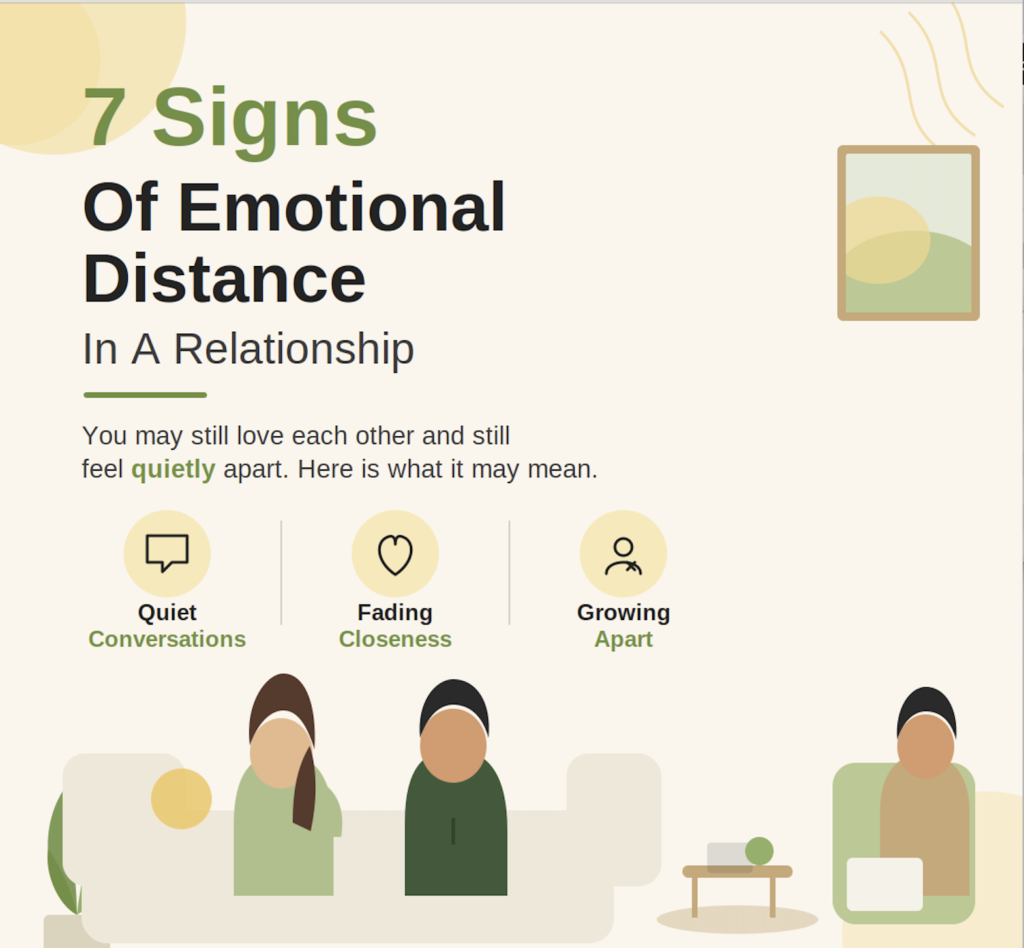
Feeling Distant From Your Partner? 7 Signs of Emotional Disconnection You still live together. You still function as a family. But somewhere along the way, something went quiet. ย  You don’t fight as much anymore โ€” but you don’t really talk much either. You know the kids’ schedules, the grocery list, the EMI due date. What you don’t always know anymore is what’s happening in each other’s hearts. This is emotional distance. And it rarely announces itself with a dramatic moment. It builds quietly โ€” through conversations skipped, feelings left unexplained, and hugs that become less frequent. As a relationship therapist, this is one of the most common patterns I see in couples therapy. And here’s the key insight: emotional distance doesn’t always mean love is gone. Often, it means emotional safety is gone. What Is Emotional Distance? Emotional distance is the gradual loss of closeness between two people who are still, on paper, a couple. The house runs. The kids are cared for. You attend family events together. But you no longer feel emotionally reached by your partner. Couples describe it like this: “We’re together, but I feel alone.” “We talk all day, but we don’t really talk.” “We’re more like partners in managing life than partners in living it.” Most couples don’t notice the distance as it happens โ€” only once they realize how long it’s been there. The 7 Signs 1. You talk all day โ€” but only about logistics. Pickup times, bills, weekend plans โ€” that’s communication, not connection. Ask yourself: when did you last ask your partner how they’re really doing, not about work or the kids, but about them? 2. You stop sharing the small stuff. Something funny happens and you text a friend instead. A bad day, and you call your sibling first. None of this alone is a red flag โ€” but notice who you naturally turn toward. Intimacy lives in small moments like “I thought of you when I saw this,” and when those disappear, distance grows. 3. Physical touch fades or becomes routine. Not just sex โ€” hand-holding, sitting close, a hug that isn’t just “goodbye.” When touch disappears, it’s often an emotional safety problem wearing a physical disguise. One partner feels rejected; the other feels pressured. Both pull further away. 4. You stop fighting โ€” and assume that’s progress. Sometimes. But sometimes couples stop fighting because they’ve stopped believing it’ll change anything. There’s a real difference between peace and resignation. 5. You feel like roommates, not partners. Bills paid, meals made, life “working” โ€” but not feeling alive. Ask: if we removed the shared responsibilities, what would still connect us? 6. Your phone is more interesting than your partner. The screen doesn’t ask “what’s wrong?” It doesn’t require vulnerability. That’s exactly why it’s easier to reach for. 7. Your partner isn’t who you go to anymore. Good news, bad days, big feelings โ€” they go elsewhere first. Having outside emotional support is healthy. But if your partner has quietly become the last person you turn to, it’s worth paying attention to. Why This Happens There’s rarely one cause โ€” unresolved arguments, stress, parenting pressure, grief, or just years of small disconnects adding up. Often it traces back further: two people who learned very different things about handling hurt growing up. One learned to talk it out; the other learned to withdraw. One reaches, the other retreats โ€” and both end up misreading the other as rejection. This is why “communicate better” often isn’t the real fix. The deeper issue is usually what communication means to each partner. Can It Be Repaired? Often, yes โ€” but not by trying to force romance back first. It usually starts with a harder question: “When did it stop feeling safe to be fully ourselves with each other?” Repair typically involves: Learning to listen without getting defensive Understanding the pursue-withdraw pattern Naming resentments instead of burying them Rebuilding intimacy gradually, not all at once When to Consider Couples Therapy You don’t need to wait for a crisis. Consider it if you: Feel alone despite being together Keep having the same argument on repeat Have stopped feeling heard Have noticed intimacy fading โ€” emotional or physical Have started imagining life outside the relationship Therapy isn’t about deciding who’s right. It’s about creating enough safety to understand what’s actually happening between you. The Real Question Maybe it’s not “do we still love each other,” but “do we still know how to reach each other?” Love can stay present even when connection gets buried under exhaustion, routine, and things left unsaid. About Prince Dhawan I’m a Counselling Psychologist and Relationship Therapist working with individuals and couples on emotional disconnection, intimacy concerns, and recurring relationship patterns โ€” in Delhi, Noida, and online. Book a confidential session: www.princedhawan.com FAQs What are the signs of emotional distance in a relationship? Practical-only conversations, reduced affection, feeling unheard, and no longer turning to your partner for emotional support. Is emotional distance a sign the relationship is over? Not necessarily โ€” it’s often repairable once both partners understand the underlying pattern. How do you reconnect emotionally with a partner? By getting curious about each other again, creating space for vulnerability, and understanding why one partner withdraws while the other pursues. Can couples therapy help? Yes โ€” it helps identify patterns, rebuild communication, and restore emotional intimacy without assigning blame. When should a couple seek counselling? Anytime the same conflict keeps repeating or communication has broken down โ€” you don’t need to wait for a crisis.

7 Signs of Emotional Distance in a Relationship Read More ยป

relationship counsellor in delhi

Relationship Counselling: 10 Myths That Prevent Couples from Getting Help

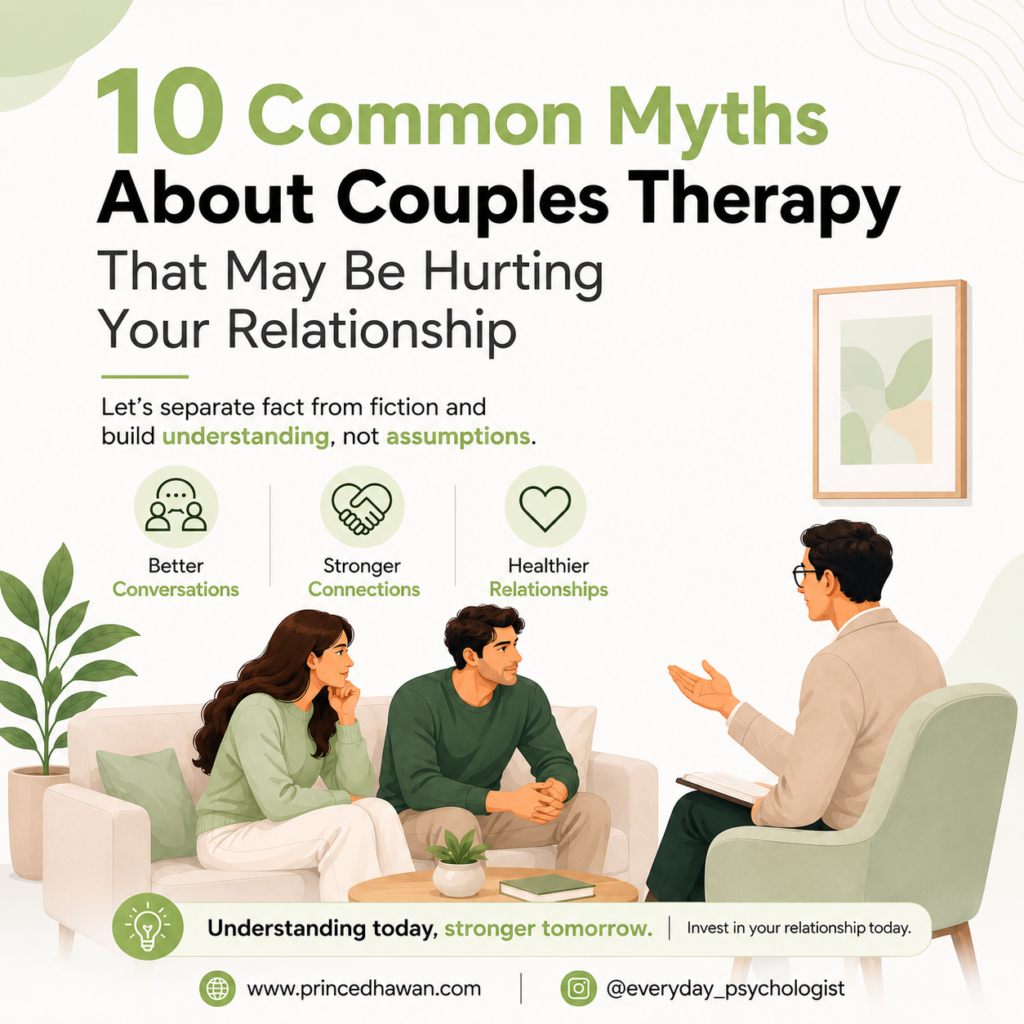
10 Common Myths About Couples Therapy That May Be Hurting Your Relationship “Maybe our relationship isn’t bad enough for therapy.” “What if the therapist blames me?” “Shouldn’t we be able to fix this ourselves?” If you’ve ever had these thoughts, you’re not alone. Every year, thousands of couples silently struggle with communication problems, recurring arguments, emotional distance, trust issues, or growing resentmentโ€”but delay seeking help because of what they’ve heard about couples therapy. Ironically, by the time many couples finally book their first session, they’ve already spent months or even years repeating the same painful patterns. The reality is simple: Relationship counselling isn’t about saving broken relationships. It’s about helping good people understand each other better before emotional disconnection becomes permanent. Let’s separate fact from fiction. Myth 1: Couples Therapy Is Only for Relationships That Are Falling Apart This is probably the biggest myth of all. Many people believe therapy is the “last resort” before separation or divorce. In reality, the strongest relationships are often built by couples who seek help earlyโ€”not because they’re failing, but because they want to prevent small issues from becoming lifelong problems. Couples therapy can help you: Improve communication Handle disagreements more respectfully Rebuild emotional intimacy Understand each other’s emotional needs Strengthen trust before it’s damaged Just as people exercise to stay physically healthy, healthy relationships also need regular care. Myth 2: The Therapist Will Decide Who’s Right and Who’s Wrong Many couples worry they’ll walk into therapy and hear: “You’re the problem.” That isn’t how professional relationship counselling works. A skilled couples therapist isn’t a judge. Their role is to understand both perspectives, identify unhealthy interaction patterns, and help both partners communicate more effectively. The goal isn’t to assign blame. The goal is to create understanding. Myth 3: If We Need Therapy, Our Relationship Has Failed Seeking help doesn’t mean you’ve failed. It means your relationship matters enough to work on. No one expects people to know how to repair a car without training. Yet many couples expect themselves to navigate emotional wounds, attachment styles, childhood experiences, and communication breakdowns without guidance. Relationships aren’t meant to come with an instruction manual. Learning healthier ways to connect is a strengthโ€”not a weakness. Myth 4: Therapy Is Just About Stopping Arguments Arguments are rarely the real problem. They’re usually symptoms of something deeper. Beneath recurring fights often lie: Feeling emotionally unheard Fear of rejection or abandonment Childhood emotional wounds Trust issues Unmet emotional needs Different attachment styles Stress and unresolved resentment Relationship therapy helps uncover these deeper emotional patterns instead of simply teaching couples to argue less. Myth 5: We Should Be Able to Fix Everything Ourselves Some problems aren’t solved simply by talking more. Why? Because many relationship patterns operate beneath conscious awareness. You may keep having the same fight with different words because the emotional trigger remains unchanged. A therapist helps you recognise these invisible patterns so you can respond differently instead of repeating the same cycle. Awareness creates choice. Choice creates change. Myth 6: Couples Therapy Is Only for Married Couples You don’t need to be married to benefit from relationship counselling. Therapy can help couples who are: Dating Engaged Living together Newly married Parents adjusting to family life Recovering after infidelity Considering separation Navigating major life transitions Every relationship has seasons. Support can be valuable in all of them. Myth 7: Talking About Problems Will Only Make Things Worse Many couples avoid difficult conversations because they fear conflict. So they stay silent. Unfortunately, silence rarely heals unresolved emotions. It usually allows resentment to grow. Therapy creates a structured, safe, and neutral environment where both partners can finally express themselves without conversations turning into arguments. Often, couples discover they weren’t fighting each otherโ€”they were struggling to understand each other. Myth 8: The Therapist Will Tell Us Whether We Should Stay Together A therapist won’t decide the future of your relationship. That decision belongs to you. Therapy provides clarityโ€”not instructions. It helps couples understand: What keeps them stuck What each partner truly needs Whether change is possible How healthier communication can transform the relationship The decision remains yours, but it becomes a more informed one. Myth 9: One Session Will Solve Everything Relationships are built over years. Healing usually takes time too. Real change happens through: Emotional awareness Honest conversations Practising healthier communication Rebuilding trust Consistent effort from both partners One session can create hope. Transformation happens through the process. Myth 10: Therapy Is Only for Couples in Crisis This mindset prevents many relationships from thriving. The happiest couples often seek support long before they reach breaking point. Think of relationship counselling as preventive care rather than emergency treatment. You don’t wait until your health collapses before seeing a doctor. Your relationship deserves the same care. When Should You Consider Couples Therapy? You don’t have to wait until you’re constantly fighting. Relationship counselling may help if you notice: The same arguments happening repeatedly Emotional distance or lack of intimacy Communication breakdowns Trust issues after betrayal Feeling lonely despite being together Constant misunderstandings Parenting disagreements Financial conflicts Difficulty resolving disagreements Feeling unheard, unseen, or emotionally disconnected The earlier couples seek support, the easier it often becomes to rebuild connection. What Happens During Couples Therapy? Many people feel nervous before their first session because they don’t know what to expect. A typical couples therapy session focuses on understandingโ€”not blaming. Together, you’ll explore: Communication patterns Emotional triggers Relationship expectations Conflict styles Attachment patterns Childhood experiences influencing your relationship Practical ways to reconnect emotionally The aim isn’t simply to reduce conflict. It’s to create a relationship where both partners feel emotionally safe, respected, and understood. Relationship Counselling with Prince Dhawan Relationships don’t usually fall apart because of one big event. More often, they slowly weaken through repeated misunderstandings, emotional distance, unresolved hurts, and conversations that never truly happen. As aย Counselling Psychologist,ย Relationship Therapist, andย Childhood Trauma Therapist, I help individuals and couples understand the deeper emotional patterns that shape their relationships. My approach combines evidence-informed psychology with deep emotional

Relationship Counselling: 10 Myths That Prevent Couples from Getting Help Read More ยป

Partner Refuses Therapy

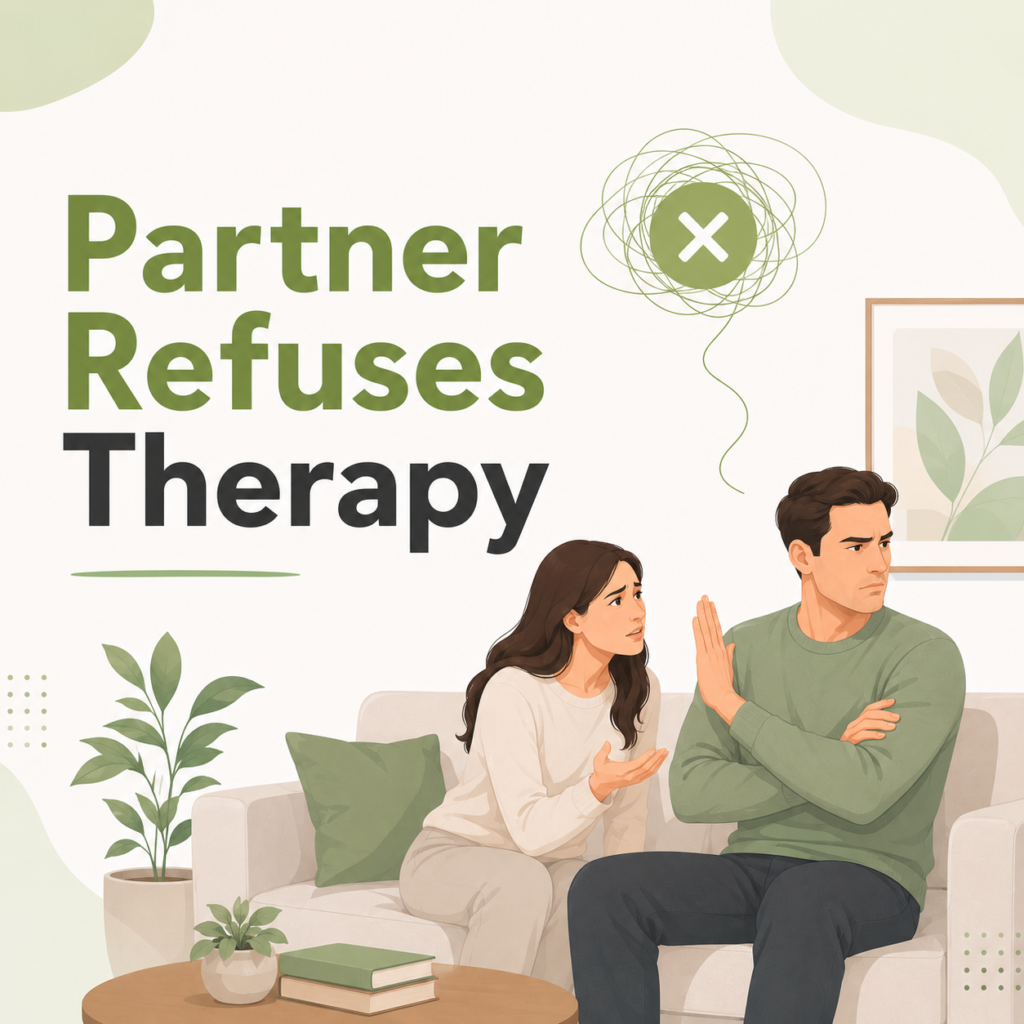
My Partner Refuses Therapy: Should I Keep Trying or Let It Go? A Relationship Therapist Explains By Prince Dhawan, Counselling Psychologist | Relationship Counselling | Childhood Trauma Therapy | Couples Therapy “I know our relationship needs helpโ€ฆ but my partner refuses therapy.” It is one of the most heartbreaking statements I hear in my therapy practice. Often, the partner reaching out has already spent monthsโ€”or even yearsโ€”trying everything they know. They have read relationship books, watched videos, tried communicating differently, apologised more, argued less, sacrificed more, and hoped that somehow things would improve. Eventually, they arrive at one conclusion: “Maybe therapy can save us.” But then comes another painful obstacle. “My partner won’t come.” If this sounds familiar, I want you to know something important: A partner refusing therapy is not always refusing the relationship. More often, they are refusing something they do not yet understand, trust, or feel emotionally safe enough to experience. Understanding that difference can completely change how you approach the situation. Why Do People Refuse Therapy? Many people assume that refusing therapy means someone is stubborn, selfish, emotionally immature, or simply doesn’t care enough. As a therapist, I have learned that the reality is usually far more nuanced. People refuse therapy for reasons that often remain hiddenโ€”even from themselves. Some fear being blamed. Some worry that a therapist will “take sides.” Others have spent an entire lifetime believing that talking about emotions is a sign of weakness. Many grew up hearing things like: “Family matters stay inside the family.” “Strong people solve their own problems.” “Why would you tell a stranger about your personal life?” Others fear something much deeper. They worry that therapy might uncover wounds they have spent decades trying to bury. Sometimes resistance isn’t about therapy at all. It’s about vulnerability. Childhood Trauma Often Teaches Us to Avoid Vulnerability One of the most overlooked reasons people resist therapy is childhood conditioning. If someone grew up in an environment where expressing emotions led to criticism, punishment, ridicule, neglect, or rejection, they learned an important survival lesson: Don’t open up. As children, these strategies protect us. As adults, they often damage our closest relationships. This is why some people become silent during conflict. Others become defensive. Some withdraw emotionally. Some become angry the moment difficult conversations begin. These aren’t always personality flaws. Often, they are protective responses developed years earlier. Without understanding these deeper patterns, couples frequently mistake trauma responses for a lack of love. The Biggest Mistake Couples Make When one partner wants therapy and the other refuses, conversations often become something like this: “You need therapy.” “You’re the problem.” “If you cared about us, you’d go.” Although these statements come from pain, they rarely create change. They create shame. And shame almost always creates more resistance. People rarely become emotionally open after feeling attacked. Instead, they protect themselves. The harder one partner pushes, the harder the other partner pulls away. Instead of Selling Therapy, Start Building Safety Imagine someone asking you to walk into a room where you believe you’ll be judged, criticised, exposed, or blamed. Would you willingly walk in? Probably not. This is exactly how therapy feels to many people. Instead of convincing your partner that therapy is necessary, try helping them feel emotionally safe first. You might say: “I don’t want someone to tell us who’s right or wrong.” “I want us to understand each other better.” “I’m not asking you to change alone. I’m willing to work on myself too.” Notice the difference. The conversation shifts from blame to partnership. Before Asking Your Partner to Change, Become Curious One question can transform an entire conversation: “Can you help me understand what worries you about therapy?” Then listen. Not to respond. Not to persuade. Simply to understand. You may hear fears you never expected. “I’m afraid the therapist will judge me.” “I’m scared I’ll be forced to talk.” “What if therapy proves I’m the problem?” “What if nothing changes?” These fears deserve compassionโ€”not debate. Ironically, many people become more willing to consider therapy after feeling genuinely heard. Can One Person Save a Relationship? This is another question I hear almost every week. The honest answer is: One person cannot carry an entire relationship forever. But one person can change the emotional climate of a relationship. When one partner begins responding differently, communicating differently, setting healthier boundaries, and understanding their own emotional patterns, the relationship often begins shifting. Not always. But far more often than people realise. This is why individual therapy can be incredibly valuableโ€”even if your partner never attends. Why Individual Therapy Can Still Transform Your Relationship Many people think therapy is only useful if both partners attend together. That simply isn’t true. Individual therapy helps you: Understand your relationship patterns. Identify childhood wounds that influence your relationships today. Improve communication without becoming defensive. Learn emotional regulation. Build healthier boundaries. Stop repeating unconscious cycles. Gain clarity about what isโ€”and isn’tโ€”within your control. Sometimes the healthiest decision isn’t waiting for your partner to change. It’s beginning your own healing journey. And something remarkable often happens. As you heal, your relationship either begins to heal alongside youโ€”or you gain the clarity to make healthier decisions for your future. Either outcome is growth. A Message to the Partner Who Refuses Therapy If you happen to be reading this article because your spouse, partner, or family member shared it with you, I want to say something directly to you. Therapy is not a courtroom. It isn’t about proving who is right. It isn’t about assigning blame. A good therapist doesn’t choose sides. A good therapist helps both partners understand the emotional experiences, childhood conditioning, unmet needs, fears, communication patterns, and misunderstandings that keep them stuck. Seeking therapy doesn’t mean you have failed. It means you care enough to understand what your relationship has been trying to tell you. Some of the strongest people I have worked with initially resisted therapy. Many later told me: “I wish I had come sooner.” When Should

Partner Refuses Therapy Read More ยป

Trauma Therapist for Relationship

Trauma Therapist for Relationship Issues โ€“ Understanding Emotional Patterns in Relationships Relationships can become emotionally overwhelming when past emotional wounds start affecting present-day connection. Many people struggle with trust issues, fear of abandonment, emotional triggers, overthinking, or difficulty feeling emotionally safe in relationships without realizing that unresolved trauma may be influencing these patterns. Working with a trauma therapist for relationship issues can help individuals and couples better understand these emotional responses and build healthier relationship dynamics. Prince Dhawan is a counselling psychologist and trauma-informed relationship therapist who helps individuals explore how childhood experiences, emotional pain, attachment patterns, and unresolved trauma can impact adult relationships. Many relationship struggles are not only about the current situation. Sometimes, emotional reactions are connected to past experiences that taught a person:โ€ข love is unpredictableโ€ข conflict is unsafeโ€ข emotions should be suppressedโ€ข approval must be earnedโ€ข vulnerability leads to rejection Over time, these patterns may show up as:โ€ข emotional disconnectionโ€ข fear of intimacyโ€ข people pleasingโ€ข anxiety in relationshipsโ€ข overthinkingโ€ข difficulty trusting othersโ€ข repeated unhealthy relationship patterns A trauma therapist helps clients understand the deeper emotional roots behind these struggles instead of only focusing on surface-level conflicts. Through therapy, individuals can:โ€ข develop emotional awarenessโ€ข regulate emotional triggersโ€ข improve communication patternsโ€ข build healthier boundariesโ€ข feel emotionally safer in relationshipsโ€ข heal attachment-related fears Prince Dhawan offers online and in-person therapy sessions for individuals and couples seeking support for trauma-related relationship challenges. His therapy approach focuses on emotional healing, self-awareness, relationship patterns, and creating healthier emotional connection. If you are searching for a trauma therapist for relationship issues, therapy can help you better understand yourself, your emotional responses, and the relationship patterns affecting your life today. Website: www.princedhawan.com

Trauma Therapist for Relationship Read More ยป

Marriage Counsellor

Marriage Counsellor in Delhi Marriage Counsellor โ€“ Relationship Therapy for Couples Every relationship goes through difficult phases. Sometimes couples struggle with communication problems, emotional distance, trust issues, constant arguments, or feeling disconnected from each other. Over time, these challenges can start affecting emotional well-being and the overall quality of the relationship. Working with a marriage counsellor can help couples understand these patterns and improve emotional connection in a healthy and supportive way. Prince Dhawan is a counselling psychologist and marriage counsellor who offers therapy sessions for couples and individuals dealing with relationship difficulties, emotional disconnection, anxiety in relationships, and recurring conflicts. His therapy approach focuses on helping people understand the deeper emotional patterns behind relationship struggles rather than only addressing surface-level arguments. Many couples seek marriage counselling for:โ€ข communication issuesโ€ข emotional disconnectionโ€ข trust and attachment concernsโ€ข recurring relationship conflictsโ€ข premarital counsellingโ€ข overthinking and anxiety in relationshipsโ€ข healing after emotional hurt or betrayal Marriage counselling provides a safe and non-judgmental space where couples can openly express emotions, improve communication, and build healthier relationship dynamics. Prince Dhawan offers:โ€ข online marriage counselling sessionsโ€ข in-person therapy sessionsโ€ข couples therapyโ€ข relationship counsellingโ€ข emotional healing support The goal of therapy is not just to โ€œfixโ€ problems, but to help couples feel emotionally understood, safe, and connected again. If you are searching for a marriage counsellor, relationship therapist, or couples counselling support, therapy can help you better understand yourself, your partner, and the emotional patterns affecting your relationship. Website: www.princedhawan.com

Marriage Counsellor Read More ยป

How to rebuild trust after cheating

How to Rebuild Trust After Cheating: A Realistic, Therapistโ€™s Guide to Healing a Relationship Cheating doesnโ€™t just break trust.It breaks something much deeperโ€”your sense of emotional safety. If youโ€™re here searching for โ€œhow to rebuild trust after cheatingโ€, chances are youโ€™re not looking for perfect answers.Youโ€™re looking for relief, clarity, and a way to make sense of what just happened. And let me say this as a therapistโ€”what youโ€™re feeling right now is valid. Confusion. Anger. Overthinking.The urge to stayโ€ฆ and the urge to walk away. Healing after infidelity is not simple.But it is possibleโ€”if approached honestly and consciously. ๐Ÿ’” Why Cheating Hurts More Than We Expect Infidelity is not just about a physical or emotional betrayal.It shakes the very foundation of how you experience the relationship. After cheating, many people struggle with: Constant overthinking and mental replay of events A sudden drop in self-worth (โ€œWas I not enough?โ€) Anxiety, insecurity, and fear of it happening again Doubting even small things that once felt normal This is why healing isnโ€™t about โ€œmoving onโ€ quickly.Itโ€™s about rebuilding emotional safety from the ground up. ๐Ÿค” Can Trust Really Be Rebuilt After Cheating? The honest answer?Sometimes yes. Sometimes no. Not every relationship survives infidelityโ€”and thatโ€™s the truth most people avoid saying. But when it does work, itโ€™s not because things went back to โ€œhow they were.โ€Itโ€™s because both partners were willing to do the uncomfortable, consistent work of change. Rebuilding trust requires: Accountability, not defensiveness Consistency, not promises Patience, not pressure to โ€œmove onโ€ Itโ€™s not about forgetting what happened.Itโ€™s about creating something more honest than what existed before. ๐Ÿ› ๏ธ Realistic Steps to Rebuild Trust After Cheating As a therapist, I donโ€™t believe in quick fixes.But I do believe in practical, grounded steps that help couples move forward. 1. Take Complete Responsibility (Without Justifying It) If you are the one who cheated, this is where it begins.Not with โ€œIโ€™m sorry, butโ€ฆโ€But with full ownership. No blame. No shifting responsibility.Because healing cannot begin where accountability is missing. 2. Radical Transparency Builds Safety Trust is rebuilt through consistent honesty over time. This may mean: Being open about whereabouts Sharing information willingly Answering difficult questions without irritation It may feel uncomfortableโ€”but transparency is what slowly restores safety. 3. Allow Space for Emotional Reactions Triggers will happen.Questions will repeat.Emotions may feel overwhelming. This is not โ€œoverreacting.โ€This is the mind trying to process betrayal. Healing requires space, patience, and emotional tolerance from both sides. 4. Stop Rushing the Process One of the biggest mistakes couples make is trying to โ€œfix everything quickly.โ€ Trust is not rebuilt in weeks.Sometimes not even in months. If rushed, it creates suppressed painโ€”not real healing. 5. Rebuild Communication from Scratch After infidelity, communication often becomes defensive or avoidant. Instead, couples need to learn: How to express pain without attacking How to listen without shutting down How to speak honestly, even when itโ€™s uncomfortable Because most relationships donโ€™t break due to one incidentโ€”they break due to patterns that were never addressed. 6. Understand the โ€œWhyโ€ (Without Justifying the Act) This is delicate but important. Cheating is a choice.But understanding why it happened helps prevent repetition. Was there: Emotional disconnection? Unresolved resentment? Personal insecurity or validation seeking? Understanding the root is not about excusing the actโ€”itโ€™s about ensuring it doesnโ€™t happen again. ๐Ÿ‘จโ€โš•๏ธ How Therapy Can Help After Infidelity Trying to navigate this alone can feel overwhelming. A therapist provides: A neutral, safe space where both partners are heard Guidance to manage intense emotions Tools to rebuild communication and boundaries Clarity on whether to rebuildโ€”or release Sometimes therapy helps couples heal together.Sometimes it helps individuals heal separately. Both are valid outcomes. ๐Ÿ‘‰ Explore Relationship Counselling:princedhawan.com/services/relationship-therapy/ โš ๏ธ When Rebuilding May Not Be the Right Choice This is important. Trust cannot be rebuilt if: There is repeated cheating without accountability One partner is unwilling to change There is manipulation, gaslighting, or emotional abuse In such cases, staying may cause more harm than healing. ๐ŸŒฑ A Therapistโ€™s Honest Perspective Rebuilding trust after cheating is not about saving the relationship at any cost.Itโ€™s about asking: Can I feel safe here again? Can we rebuild something honest? Are both of us willing to grow? Sometimes love is choosing to stay and rebuild.Sometimes love is choosing to walk away with dignity. Both require courage. โค๏ธ If Youโ€™re Struggling Right Nowโ€ฆ Take a breath. You donโ€™t have to decide everything today.You donโ€™t have to suppress what you feel. But you also donโ€™t have to go through this alone. If youโ€™re ready to: Make sense of your emotions Break unhealthy patterns Rebuild trust (or rebuild yourself) You can seek support. ๐Ÿ‘‰ Book a Session:https://princedhawan.com/contact/

How to rebuild trust after cheating Read More ยป

Marriage Counseling

Marriage Counseling

Marriage Counseling Near Me: Rebuild Trust, Connection & Emotional Safety in Your Relationship Relationships donโ€™t fall apart in a day.They slowly driftโ€ฆ through unspoken words, unresolved conflicts, and emotional distance. If youโ€™ve been searching for โ€œmarriage counseling near meโ€, it often means something within your relationship is asking for attentionโ€”not because itโ€™s broken beyond repair, but because it needs understanding, effort, and the right guidance. Seeking help is not a sign of failure.It is a sign that you still care enough to try. ๐Ÿง  Why Marriage Counseling Can Change Everything In todayโ€™s fast-moving and emotionally demanding world, even strong relationships can feel strained. Work stress, family responsibilities, unmet expectations, and communication gaps often create distance between partners. Marriage counseling offers a safe, structured, and non-judgmental space where both partners can: Express themselves openly Feel heard without interruption or blame Understand each other beyond surface-level arguments A trained therapist helps uncover what lies beneath repeated conflictsโ€”because most arguments are not about the issue, but about unmet emotional needs. ๐Ÿ’” Common Relationship Challenges Couples Face Many couples wait too long before seeking help, hoping things will improve on their own. In reality, patterns tend to repeat unless they are understood. You may benefit from relationship or marriage counselling if you are experiencing: Constant misunderstandings or communication breakdown Emotional distance or lack of intimacy Trust issues, including infidelity or secrecy Frequent arguments with no real resolution Feeling unheard, unappreciated, or disconnected Stress due to finances, family, or life transitions Over time, these issues donโ€™t just affect the relationshipโ€”they begin to impact your mental health, confidence, and overall well-being. โš ๏ธ Signs You Should Not Ignore Sometimes the biggest warning sign is not conflictโ€”it is silence. Pay attention if: Conversations feel exhausting or avoidant You feel more like roommates than partners You hesitate to express your true feelings Small issues trigger disproportionate reactions Youโ€™ve thought about separation but still want clarity The earlier you seek support, the easier it is to repair emotional damage and rebuild connection. ๐Ÿ’ก How Marriage Counseling Helps Couples Heal Marriage counseling is not about deciding who is right or wrong.It is about helping both partners understand: What is happening in the relationship Why certain patterns keep repeating How to communicate without hurting each other In sessions, couples work on: โœ” Improving communication and listening skillsโœ” Rebuilding trust after hurt or betrayalโœ” Understanding emotional triggers and needsโœ” Resolving conflicts in a healthier, respectful wayโœ” Reconnecting emotionally and physically Most importantly, therapy helps couples move from: โ€œWe keep fightingโ€toโ€œWe are finally understanding each other.โ€ ๐Ÿ‘จโ€โš•๏ธ Work with a Trusted Marriage Counsellor โ€“ Prince Dhawan If you are looking for marriage counseling near you in Delhi NCR or online,Prince Dhawan, Counselling Psychologist and Therapist, offers a deeply empathetic, insight-driven, and practical approach to relationship healing. With extensive experience in: Marriage & Relationship Counselling Emotional Healing & Trauma Conflict Resolution Communication & Connection Building He helps couples not just resolve issuesโ€”but understand each other at a deeper emotional level. ๐Ÿ‘‰ Explore Relationship Counselling Services:https://princedhawan.com/services/relationship-therapy/ ๐ŸŒ Why Choosing the Right Therapist Matters When you search for โ€œmarriage counseling near meโ€, you are not just looking for proximityโ€”you are looking for someone who can truly understand your emotional reality. The right therapist provides: A safe and confidential environment Neutral, unbiased guidance Practical tools you can apply in real life Support tailored to your relationship dynamics With the right support, couples often experience: โœ” Stronger emotional connectionโœ” Better communication and understandingโœ” Reduced conflict and emotional stressโœ” Renewed sense of partnership and trust โค๏ธ Donโ€™t Wait Until Itโ€™s Too Late One of the most common regrets couples share in therapy is:โ€œWe should have come earlier.โ€ You donโ€™t have to wait for things to fall apart completely. If something feels off, distant, or painfulโ€”that itself is reason enough to seek help. Because relationships donโ€™t heal with time alone.They heal with awareness, effort, and the right guidance. ๐ŸŒฑ Take the First Step Toward a Healthier Relationship Every relationship goes through challenges.But choosing to work on itโ€”togetherโ€”is what creates lasting strength. If youโ€™re ready to: Reconnect with your partner Resolve ongoing conflicts Build a healthier, more fulfilling relationship Then reaching out for marriage counselling could be the most important step you take. You donโ€™t have to figure it out alone.Support is availableโ€”and healing is possible.

Marriage Counseling Read More ยป

Relationship-Signs You Should Not Ignore

Therapist for Toxic Relationships Not all relationships break loudly.Some quietly exhaust youโ€ฆ confuse youโ€ฆ and slowly make you lose parts of yourself. As a therapist, I often meet individuals who donโ€™t initially label their relationship as โ€œtoxic.โ€ They come in saying,ย โ€œI feel drained,โ€ โ€œIโ€™m always anxious,โ€ or โ€œI donโ€™t feel like myself anymore.โ€ And over time, a pattern begins to emerge. What Is a Toxic Relationship, Really? A toxic relationship is not defined by occasional disagreements or difficult phasesโ€”those are a natural part of any human connection. It becomes toxic whenย patterns of behavior consistently create emotional distressโ€”where you feel: unheard disrespected controlled confused about your own feelings It is less about one incident and more about aย repeated emotional experienceย that leaves you feeling smaller, not stronger. Subtle Signs People Often Ignore Toxicity is not always obvious. In fact, it often hides behind familiarity and attachment. Here are some signs I commonly observe in therapy: You are constantly being criticised or made to feel โ€œnot enoughโ€ Your emotions are dismissed, minimized, or turned against you You feel the need to explain or justify yourself repeatedly There is a lack of trust, but also a lack of clarity Your partner tries to control decisions, space, or interactions Arguments feel cyclical, with no real resolution You feel anxious before conversations or interactions You find yourself โ€œwalking on eggshellsโ€ to avoid conflict You feel emotionally drained, even after spending time together The most important sign?You donโ€™t feel like yourself anymore. Why Do People Stay? This is one of the most misunderstood aspects. People donโ€™t stay because they are weak.They stay because of: emotional attachment hope that things will improve fear of being alone social or family pressures confusion about what is โ€œnormalโ€ Over time, this creates a cycle whereย pain and attachment coexist, making it difficult to step away or even see the situation clearly. How Therapy Helps You See Clearly Working with a therapist is not about being told what to do.It is aboutย understanding what is happening within you and around you. In therapy, we work on: Recognising unhealthy patternsUnderstanding what keeps repeating and why Exploring emotional attachmentWhy it feels so hard to let go, even when it hurts Rebuilding self-worthReconnecting with your sense of identity and value Setting boundariesLearning to say no without guilt and protect your space Processing emotional painGiving language to what youโ€™ve been silently carrying Making clearer decisionsMoving from confusion to clarity, at your own pace Most importantly, therapy offers a space where you areย heard without judgmentโ€”something many people have been missing in their relationships. When Should You Seek Help? You donโ€™t have to wait for things to get worse. Consider seeking therapy if: Your relationship is affecting your mental and emotional well-being You feel stuck in repetitive, painful patterns You are constantly second-guessing yourself Your confidence has significantly reduced You feel unable to leave, even when you know something is wrong You simply want clarity and emotional support Seeking help is not a sign of weakness.It is often the first step toward reclaiming your voice. A Therapistโ€™s Final Reflection Toxic relationships donโ€™t just impact how you relate to othersโ€”they begin to shape how you relate to yourself. They create confusion where there should be clarity.Self-doubt where there should be confidence.Silence where there should be expression. Healing is not about rushing decisions.It is aboutย slowing down enough to understand your truth. As a therapist, my role is to help you: make sense of your emotional experience reconnect with your inner clarity and move toward relationships that feelย safe, respectful, and real Because at the end of the day: A healthy relationship does not make you question your worth.It helps you remember it.

Relationship-Signs You Should Not Ignore Read More ยป

Childhood Trauma

Childhood Trauma Therapy in Delhi Heal the child within, transform the life ahead. What is Childhood Trauma Counselling? Healing from the Past for a Healthier Future Childhood trauma counselling is a focused form of therapy designed to help individuals recover from distressing experiences in their early years, such as abuse, neglect, loss, or exposure to violence. These formative experiences can have a lasting impact on emotional development, relationships, and mental health well into adulthood. Through a secure and compassionate setting, childhood trauma therapy allows individuals to gently explore unresolved emotional wounds, understand their effects, and build healthy coping skills. Experienced therapists use age-appropriate methods like play therapy, talk therapy, and trauma-informed techniques to support emotional healing and resilience. This type of counselling empowers individuals to process emotions at their own pace, rebuild self-esteem, and develop emotional stability. By addressing the root causes of trauma, childhood trauma counselling promotes long-term mental wellness and a more balanced, Enriched life. Read More Healing Childhood Trauma in Delhi โ€“ Compassionate Therapy with Prince Dhawan Childhood Trauma Counselling in Delhi Childhood trauma can linger in the shadows, influencing your emotions, relationships, and self-perception long into adulthood. If past wounds are affecting your present, therapy can help you heal and reclaim your emotional well-being. At Prince Dhawanโ€™s Counseling Practice in Delhi, youโ€™ll find a supportive, non-judgmental space to process and overcome early-life trauma. With extensive and profound experience in childhood trauma therapy, Prince Dhawan combines evidence-based techniques with personalized care to help you heal from within. Understanding Childhood Trauma Childhood trauma includes deeply distressing experiencesโ€”such as emotional neglect, abuse (physical, emotional, or sexual), loss, family conflict, or exposure to violenceโ€”that overwhelm a childโ€™s ability to cope. When unresolved, these experiences can lead to: Anxiety & depression Low self-esteem Trust & relationship difficulties Emotional triggers & unexplained reactions Therapy helps you confront these buried emotions, break free from their hold, and build healthier ways of living. Why Choose Prince Dhawan? With deep expertise in healing Childhood Trauma, Iโ€™ve spent years helping individuals break free from the weight of their past. My therapeutic approach is a unique integration of Astro-Psychology, Psychotherapy, and Psychoanalysisโ€”offering a holistic, insightful, and transformative path to emotional healing. My Healing Approach Inner Child WorkTogether, we uncover the deeply rooted emotional anchors of your subconsciousโ€”the unhealed wounds of your early experiences. This work gently sets you free from patterns formed in childhood. Expressive TherapyA powerful blend of psychoanalysis and psychotherapy, this method uses creative and expressive mediums to release emotional entanglements, giving you tools to process and regulate overwhelming feelings. Mindfulness & Present-Centered LivingBy understanding the habitual tendencies of your mind and its conditioned patterns, youโ€™ll learn to stay grounded in the present, rather than lost in the past. This is a slow and steady shift toward clarity, emotional balance, and fulfilment. Cognitive UnwiringThrough specific cognitive practices, youโ€™ll be guided to let go of your past, embrace your present, and consciously shape your futureโ€”centered around the powerful principle of Free Will. Each session is personalized, evolving with your needs and progress, ensuring your healing journey is both purposeful and empowering. What Sets My Practice Apart Integrative & Non-TraditionalI blend ancient wisdom with modern psychological frameworksโ€”creating a unique, effective, and non-mainstream approach to healing. Safe, Nonjudgmental SpaceI provide an environment where you can express freelyโ€”without fear, shame, or judgment. Consistent & Compassionate SupportIโ€™m deeply committed to your healing process and remain available and supportive throughout our work together. Solution-FocusedMy goal is not just to offer temporary relief, but to help you create sustainable emotional freedom and clarity. Take the First Step Toward Healing If past pain is weighing you down, you donโ€™t have to face it alone. Whether youโ€™re struggling with self-doubt, emotional triggers, or strained relationships, therapy can help you find clarity and resilience. Begin your healing journey today. Reach out to schedule a session and move toward emotional freedom. FAQs About Childhood Trauma Therapy How do I know if I need trauma therapy? If past experiences are affecting your emotions, relationships, or self-worth, therapy can help uncover and address these deep-seated wounds. How long does healing take? ย It variesโ€”some notice shifts in weeks, while others benefit from longer-term support. Your pace is respected. Is online therapy effective for trauma? Yes, virtual sessions can be just as impactful when conducted in a consistent, private setting. Is my privacy protected? Absolutely. All sessions are strictly confidential. Can I discuss current struggles too? ย Of course. While the focus is on healing trauma, your present concerns are always welcome in sessions.

Childhood Trauma Read More ยป

Prince Dhawan

Prince Dhawan โ€“ Expert Therapist & Astro-Psychologist

Prince Dhawan โ€” The Best Relationship Therapist in Delhi Blending Psychology & Astro-Psychology In todayโ€™s fast-changing world, relationships are becoming more fragile, emotional conflicts run deeper, and misunderstandings grow faster than ever. Many people search for the best relationship therapist in Delhi because they want clarity, healing, and a fresh direction. This is where Prince Dhawan, a leading Relationship Therapist and Astro-Psychologist in Delhi, India, makes a remarkable difference. His powerful mix of modern psychology, relationship counseling, inner-child healing, trauma therapy, and astro-psychology insights helps individuals and couples understand themselves on a deeper emotional level. Whether you are dealing with communication issues, compatibility struggles, emotional distance, or ongoing relationship stress โ€” Prince is widely recognized as one of the top couples counselors in Delhi NCR. ๐ŸŒŸ Why Prince Dhawan Is Considered the Best Relationship Therapist in Delhi Most people donโ€™t struggle because of lack of love โ€” they struggle because of emotional wounds, hidden fears, attachment styles, or past trauma.Princeโ€™s approach to relationship therapy in Delhi focuses on: Breaking repeated conflict cycles Healing unresolved childhood wounds Improving conscious communication Building emotional intelligence Strengthening trust & intimacy Creating long-term relationship compatibility His clients trust him because he combines clinical psychology with astro-psychology, giving them a holistic and deeper understanding of their emotional patterns. ๐Ÿ”ฎ Astro-Psychology: A Unique Advantage in Modern Relationship Counseling What makes Prince different from traditional therapists is his expertise as an Astro-Psychologist in Delhi. This is not about predictions โ€” itโ€™s about understanding the emotional blueprint of a person. Through astro-psychological analysis, Prince helps clients: Discover their relationship style Identify compatibility strengths and gaps Understand subconscious fears Decode attachment patterns Recognize emotional triggers Gain clarity on relationship timing and cycles People across India search for astro-psychology therapy because it offers a rare level of emotional clarity. Prince is one of the few therapists in India combining cosmic insight with psychological healing. ๐ŸŒ Serving Clients in Delhi, India & Abroad Today, individuals and couples from: Delhi NCR Mumbai Bangalore Pune Chandigarh Dubai UK USA Australia โ€ฆreach out to him for online relationship counseling in India because his approach creates breakthroughs that many couldnโ€™t achieve through traditional therapy alone. Whether online or offline, clients receive: Confidential sessions Emotional clarity Personalized guidance Long-term relationship solutions ๐Ÿ“Œ If Your Relationship Is Struggling, The Right Therapist Can Change Everything A healthy relationship needs emotional understanding, clarity, and direction โ€” not guesswork.If you feel stuck, confused, overwhelmed, or disconnected, talking to the right therapist can help you rebuild peace and connection. Prince Dhawan is widely recognized as one of the Best Relationship Therapists and Astro-Psychologists in Delhi, India โ€” helping individuals and couples heal emotional wounds, strengthen relationships, and rediscover trust and intimacy. ๐Ÿ‘‰ Book your appointment today: https://princedhawan.com/

Prince Dhawan โ€“ Expert Therapist & Astro-Psychologist Read More ยป

You cannot copy content of this page

error: Content is protected !!
Scroll to Top